A complete guide to crochet hook types — and which ones beginners should actually use
When you’re new to crochet, crochet hooks can all look the same at first. But once you start using them, you’ll quickly notice that each type of hook feels very different in your hands.
The material, shape, and handle design of a crochet hook affect:
How smoothly your yarn moves
How much control you have over your stitches
How tired your hands feel
And whether crocheting feels relaxing or frustrating
In this guide, we’ll take a closer look at six common crochet hooks you’ll often see, explain how each one works, and then help you decide which hooks are best for beginners—without overbuying or overthinking.
*Note that: If you’re not sure which hook size to choose, you might find this guide helpful:
How to Choose the Right Crochet Hook Size for Each Yarn Weight.
1. Tulip-Style Ergonomic Crochet Hooks
(comfortable, smooth, and beginner-friendly)
Tulip-style crochet hooks are a favorite among many crocheters because they combine a smooth metal tip with a soft, ergonomic handle. The hook glides easily through yarn, while the cushioned handle helps reduce hand and wrist strain.
For beginners, this combination is incredibly helpful. You can focus on learning stitches instead of worrying about discomfort or losing control.
What it feels like to crochet with:
Smooth yarn glide
Stable, controlled stitches
Comfortable grip even during longer sessions
Pros:
Excellent stitch control
Comfortable for beginners and long practice sessions
Works well with most yarn types
Cons:
Slightly more expensive than basic hooks
Best for:
Beginners who want comfort, consistency, and an enjoyable
learning experience right from the start.
2. Double-Ended Crochet Hooks
(two hooks in one tool)
Double-ended crochet hooks have a hook on both ends, usually in two different sizes. These hooks are often used for specific techniques, but they can also be practical tools once you’re comfortable holding a hook.
For absolute beginners, they’re not essential—but they can be useful as your skills grow.
What it feels like to crochet with:
Similar to a standard hook
Slightly different balance due to hooks on both ends
Pros:
Two sizes in one hook
Space-saving and travel-friendly
Cons:
Less comfortable for long sessions
Not necessary when just starting
Best for:
Beginners who already understand basic stitches and want to
experiment or save space in their tool kit.
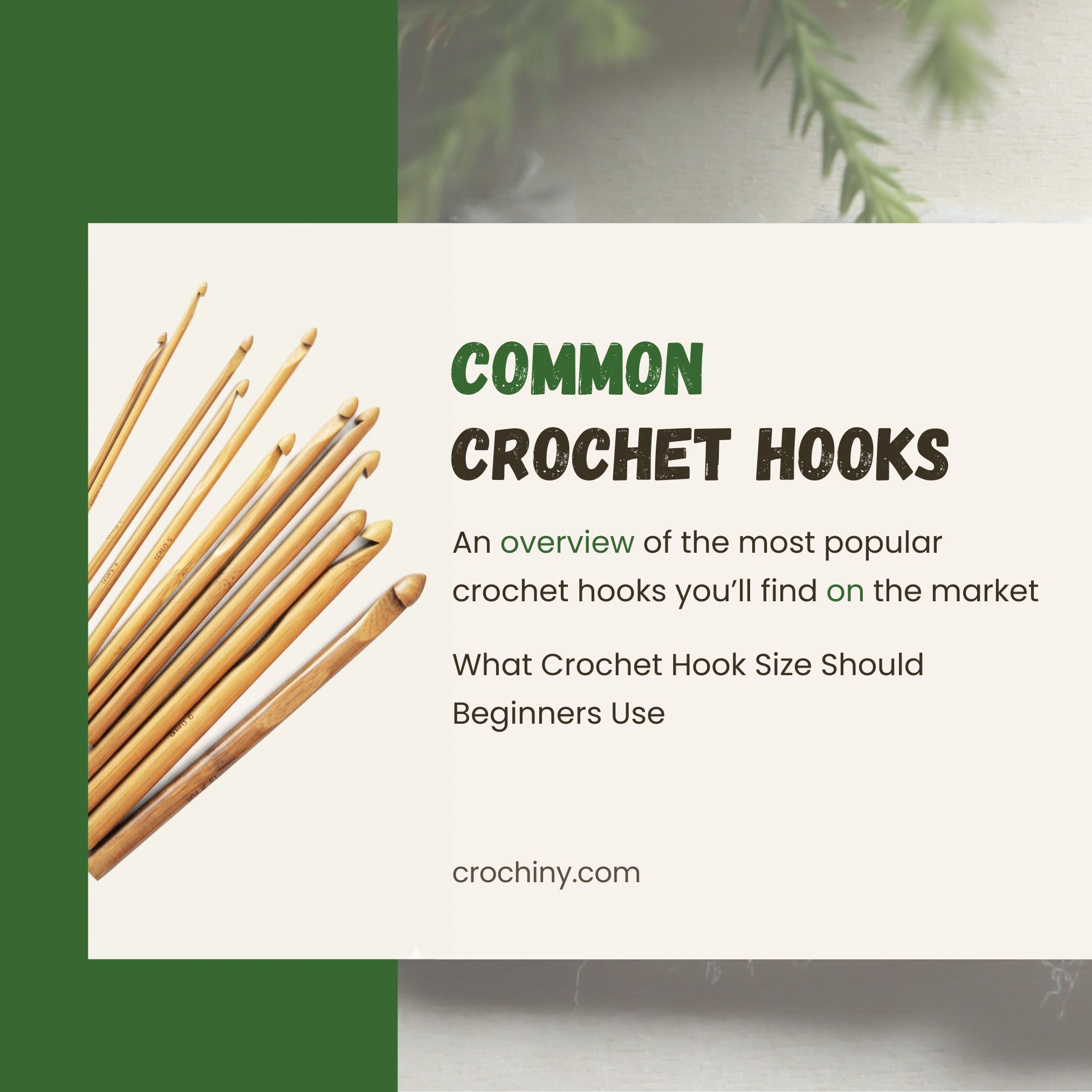
3. Bamboo Crochet Hooks
(lightweight with extra grip)
Bamboo crochet hooks are known for their warm, natural feel and slightly grippy surface. This extra friction slows down the yarn just enough to help beginners keep better control, especially if their tension is loose.
If you’ve ever felt like your stitches slip off too easily, bamboo hooks can make learning feel calmer and more manageable.
What it feels like to crochet with:
Soft, warm touch
Slower, more controlled stitching
Pros:
Great control for beginners
Lightweight and comfortable
Ideal for slippery yarns
Cons:
Can break if bent too hard
Not as smooth as metal
Best for:
Beginners who want extra control and a more relaxed crochet
pace.
4. Wooden Crochet Hooks
(balanced and comfortable)
Wooden crochet hooks are similar to bamboo hooks but usually feel sturdier and slightly heavier. They offer a smooth surface with gentle resistance, which helps you feel each stitch clearly as you work.
Many crocheters describe wooden hooks as calming to use, making them a great choice for slow, mindful projects.
What it feels like to crochet with:
Balanced weight
Gentle resistance with smooth motion
Pros:
Comfortable for longer sessions
Easy on the hands
Great stitch feedback
Cons:
Can wear down over time
Not ideal for very tight stitches
Best for:
Beginners who enjoy a traditional feel and prefer slower, more
controlled crochet.
5. Aluminum Crochet Hooks
(the classic beginner hook)
Aluminum crochet hooks are one of the most common hooks you’ll find in patterns and starter kits. They’re lightweight, durable, and allow yarn to glide smoothly without much resistance.
Because they’re so widely used, many beginners start with aluminum hooks—and for good reason.
What it feels like to crochet with:
Very smooth and fast
Easy stitch movement
Pros:
Affordable and easy to find
Available in almost every size
Works with most yarns
Cons:
Can feel slippery for beginners
Less comfortable for long sessions
Best for:
Learning basic stitches, following patterns, and practicing
tension.
6. Plastic Crochet Hooks
(lightweight and beginner-accessible)
Plastic crochet hooks are extremely lightweight and often brightly colored, making sizes easy to recognize. They’re commonly used for larger hook sizes and thicker yarns.
While they’re not always the smoothest option, they’re affordable and easy to work with for simple projects.
What it feels like to crochet with:
Very light in the hand
Slightly more friction than metal
Pros:
Budget-friendly
Easy to identify sizes
Great for bulky yarn
Cons:
Can squeak with certain yarns
Less durable
Best for:
Practice projects, bulky yarns, and beginner kits.
Which Crochet Hooks Are Best for Beginners?
If you’re just starting out, you don’t need all six types right away. A beginner-friendly setup might look like this:
One Tulip-style ergonomic hook or aluminum hook (4.0–5.5 mm)
One bamboo or wooden hook to compare how different materials feel
Optional: a plastic hook for bulky yarn or casual practice
Starting small helps you understand what feels right in your hands without overwhelming yourself.
Final Thoughts
Every crocheter eventually develops personal preferences. The best crochet hook isn’t the most expensive or popular—it’s the one that makes crochet feel enjoyable for you.
By understanding how different crochet hooks work and starting with beginner-friendly options, you’ll build confidence faster and enjoy the learning process much more.